University Biological Resources Policies & Guidelines
Biological Resources Guidelines
Biological Resources-Documents
DEA
Each PI who uses or receives DEA-controlled substances must obtain an individual DEA Research Registration (Form 225).
PIs are individually responsible for:
- Ordering controlled substances
- Maintaining accurate usage logs
- Conducting and documenting inventory
Biological Resources can provide support.
We can:
- Assist with the DEA registration process
- Help establish compliant record-keeping procedures
- Assist with controlled substance ordering, as needed
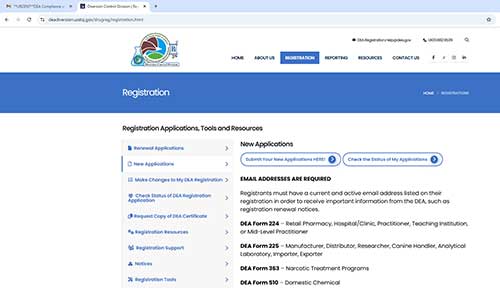
Original Application - To obtain a new DEA license for research purposes, log on to the DEA website and click on “New Applications.”
Once redirected, see the pages below for step-by-step instructions for completing this online application. The application takes about 15 minutes to complete, but it can take 6-8 weeks to obtain the license so plan ahead. If you require additional assistance during the application process, you may contact the IACUC/IBC Administrator or Biological Resources.
Application Renewal – The DEA license needs to be renewed annually. Use the same DEA website address, but select “Renewal Applications” instead.
Once registered, send a copy of your certificate to:
- Leigh Ann Wiggins, Senior Manager, Biological Resources – for ordering and transfer documentation
- Danielle Miller, IACUC/IBC Administrator – for IACUC protocol congruency tracking
NEW APPLICATIONS
Select “new application” on the DEA website:
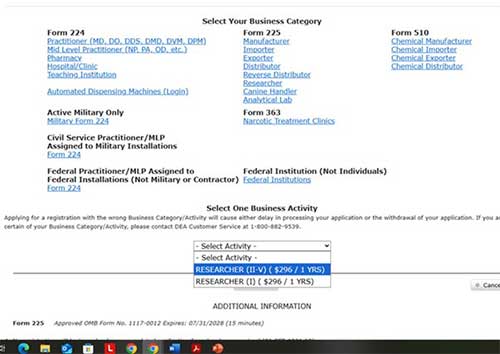
Select “researcher” under “Form 225” and “RESEARCHER II-V” from the drop-down:
Leave the next page blank unless you wish to designate a POA. Click “proceed”.
Complete the personal information section. This must match where the controlled substances will be STORED. You can have your registration mailed to your department by completing the mailing address for your department.
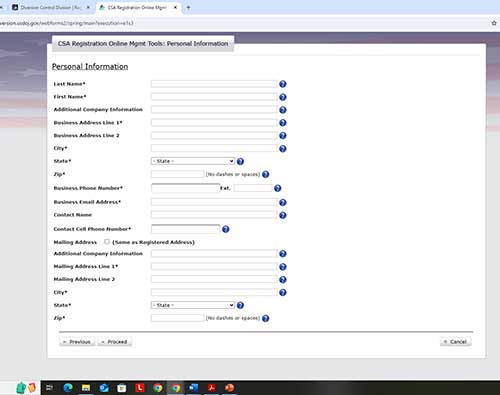
Follow the prompts to validate your email address. Click proceed.
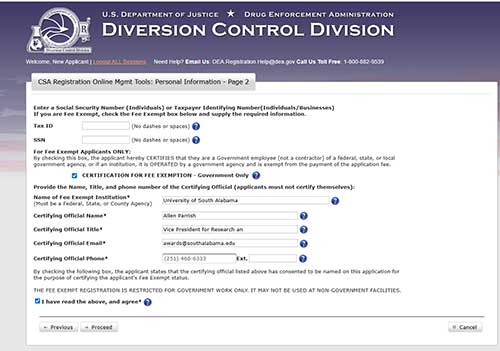
On the next page, enter your SSN and check the fee exemption box.
The University of South Alabama (USA) is a state institution and is fee exempt for DEA registration. When completing the application, the researcher should list either the Chair of their department or Dr. Allen Parrish, Vice President for Research and Economic Development, as the certifying official. For Dr. Parrish, they should use the following contact email: awards@southalabama.edu. Use the following contact phone number: 251-460-6333.
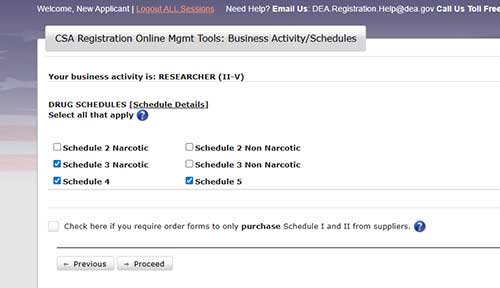
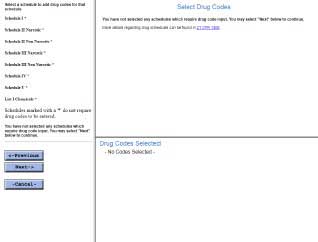
Select the drug schedules required for your research. (Ethiqa XR and buprenorphine are narcotic schedule III drugs. Ketamine and Euthasol are non-narcotic schedule III drugs.) Click proceed.
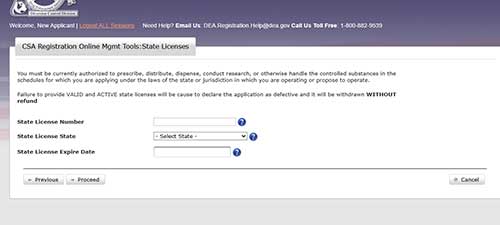
Do NOT complete this section. Alabama does not issue CSRs to researchers. Click proceed.
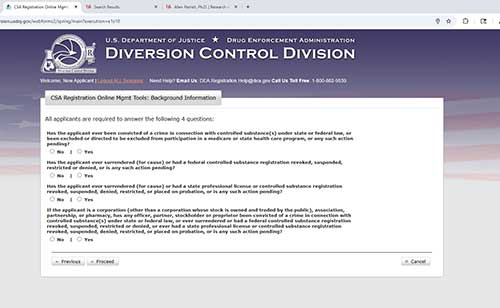
Answer the following questions and click proceed.
Click proceed again to skip the next page.
On the final page:
Check that all information is correct. Remember, the registered address is the PHYSICAL LOCATION of your substance storage.
If everything is correct, e-sign the application and follow the prompts to submit the application.
Be sure to print the confirmation page of your submission.
You should receive an email from the DEA with the following in the subject line: “DEA Registration Application Receipt”.
The DEA license needs to be renewed annually. Use the same DEA website address, but select “Renewal Applications” instead. Follow the prompts, using the same information as was used for your prior (new or renewal) application, making changes where appropriate (e.g., change of address, etc.)
Resources
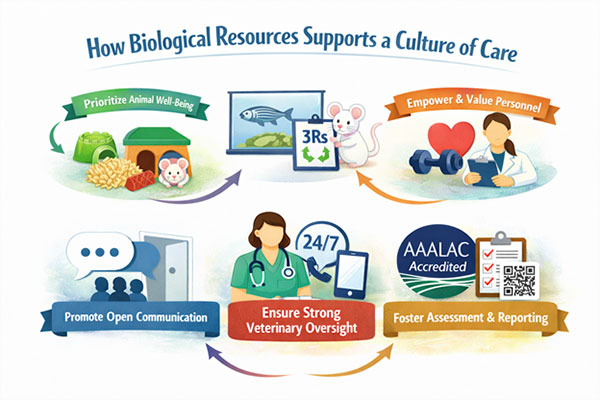
Biological Resources is committed to a Culture of Care that places animal well-being, staff support, and open communication at the center of daily operations. Animals receive attentive care supported by enrichment, skilled husbandry staff, and readily available veterinary oversight. Team members are encouraged to speak up, ask questions, and participate in ongoing assessment and improvement. Together, these practices promote humane animal care, responsible research, and a supportive working environment.
Prioritize Animal Well-Being
Prioritize Animal Well-Being
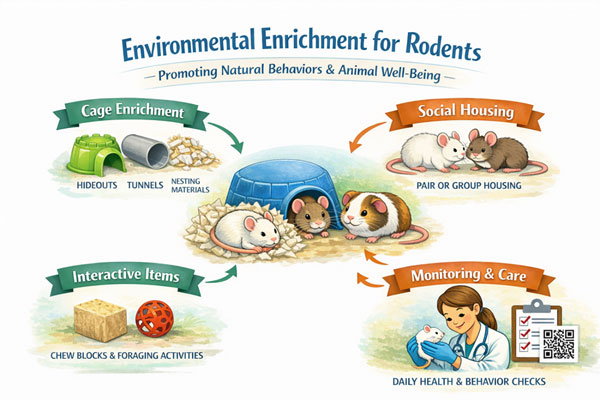
Biological Resources supports animal well-being through daily husbandry practices designed to promote species-typical behavior and reduce stress. All rodent cages are provided with multiple forms of environmental enrichment, including novel nesting material and an additional toy, shelter, or hut, to encourage nesting, exploration, and resting behaviors. Enrichment strategies are routinely evaluated and adjusted based on animal needs and veterinary guidance.
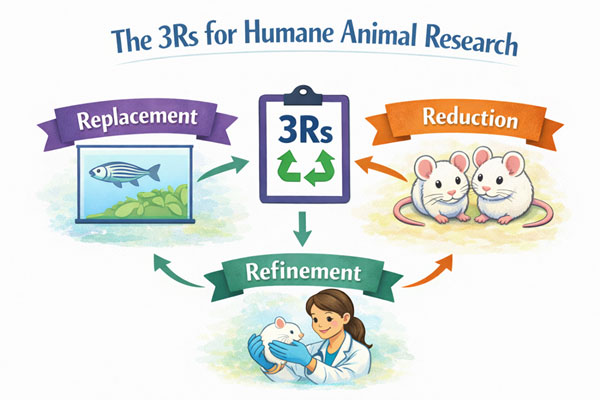
Support the 3Rs (Replacement, Reduction & Refinement)
Web Services
The vivarium actively supports refinement and reduction by using animals that are not needed for experimental studies for teaching and training, minimizing the need to acquire additional animals solely for instructional purposes. Biological Resources also continues to expand new species capabilities, such as zebrafish, to support investigators in selecting the most appropriate models for their research. In addition, the institutional animal adoption program, including eligible rodents, reflects a commitment to responsible animal stewardship beyond study endpoints.
Empower and Value Personnel
Empower and Value Personnel
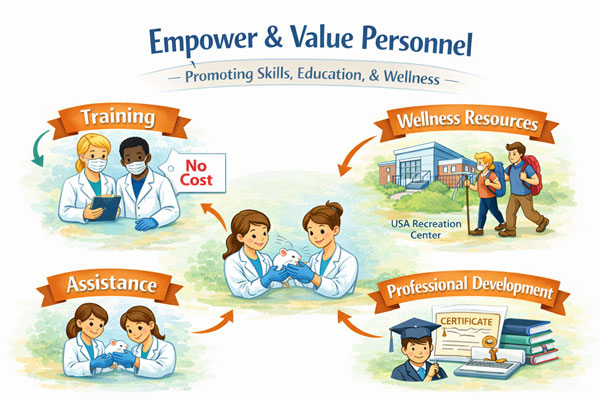
Biological Resources recognizes that a Culture of Care depends on knowledgeable, supported personnel. Training for research staff is provided at no cost, and vivarium personnel offer hands-on assistance with experimental techniques, animal handling, and procedural support. Opportunities for professional development and wellness are encouraged, including on-the-job training and access to university wellness resources such as the USA Recreation Center and USA Nature Trails.
Foster Open Communication
Foster Open Communication
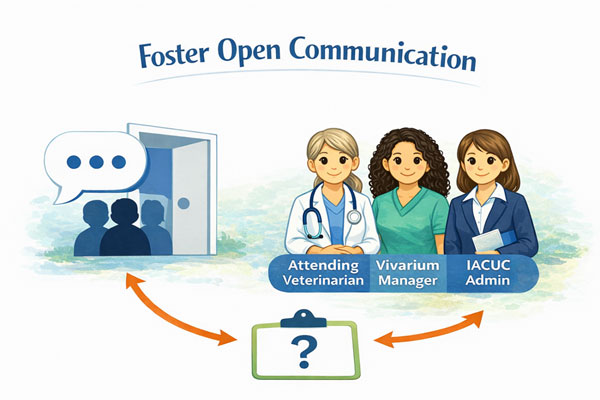
The vivarium fosters open communication through an open-door approach and consistent leadership presence. The Attending Veterinarian, Vivarium Manager, and IACUC/IBC Administrator are present in the vivarium daily, providing opportunities for real-time discussion, troubleshooting, and support. Investigators and staff are encouraged to ask questions, raise concerns, and seek guidance without fear of reprisal.
Ensure Strong Veterinary Oversight
Ensure Strong Veterinary Oversight
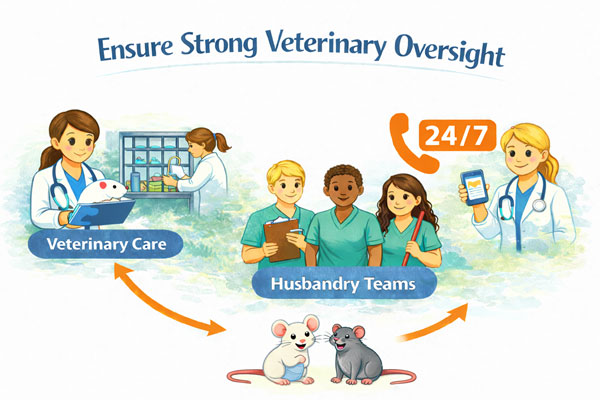
Veterinary oversight is a cornerstone of the animal care program. The Attending Veterinarian has designated program authority, with contact information, including a personal cell phone number, posted throughout the vivarium. Veterinary coverage is available 24 hours a day, 7 days a week, either directly or through a designee. The Vivarium Manager is also available after hours, with contact information clearly posted to ensure timely support.
Foster Assessment and Reporting
Foster Assessment and Reporting
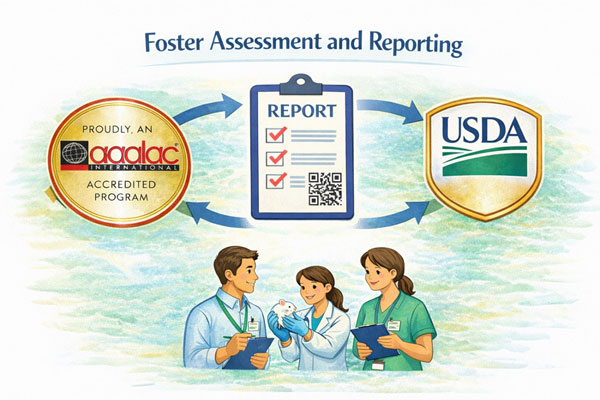
Biological Resources supports assessment and transparent reporting by ensuring that the institutional animal welfare policy statement is posted throughout the vivarium, with a QR code providing easy access to additional information. The program includes clear mechanisms for reporting animal welfare concerns, including options for anonymous reporting and protections from reprisal for individuals who raise concerns in good faith. These measures reinforce a shared responsibility for animal welfare and accountability.